Heal with us!
Harness the power of the healing waters to restore your health
Group water aerobics
Rediscover your strength in the healing waters
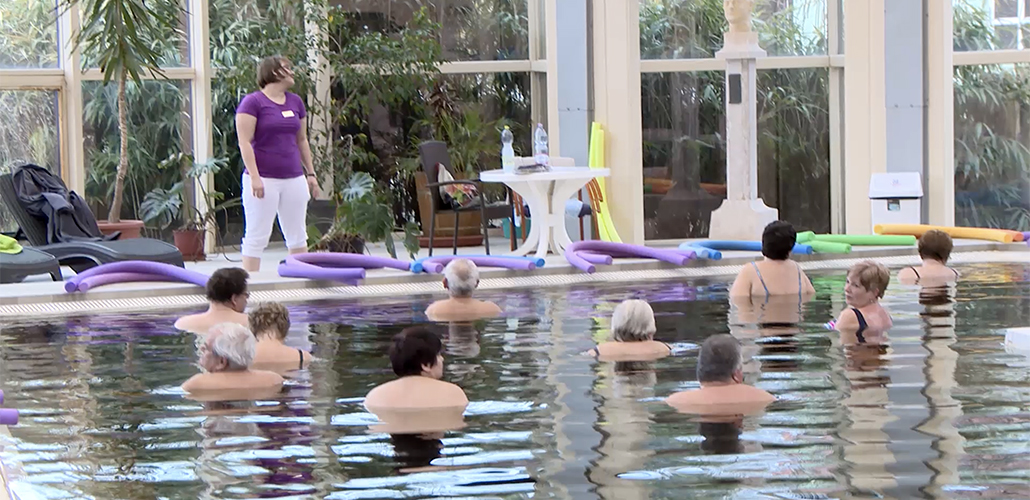
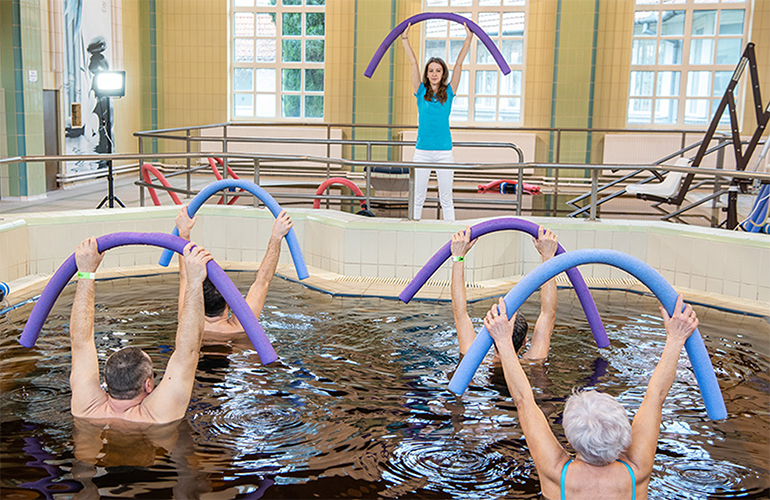
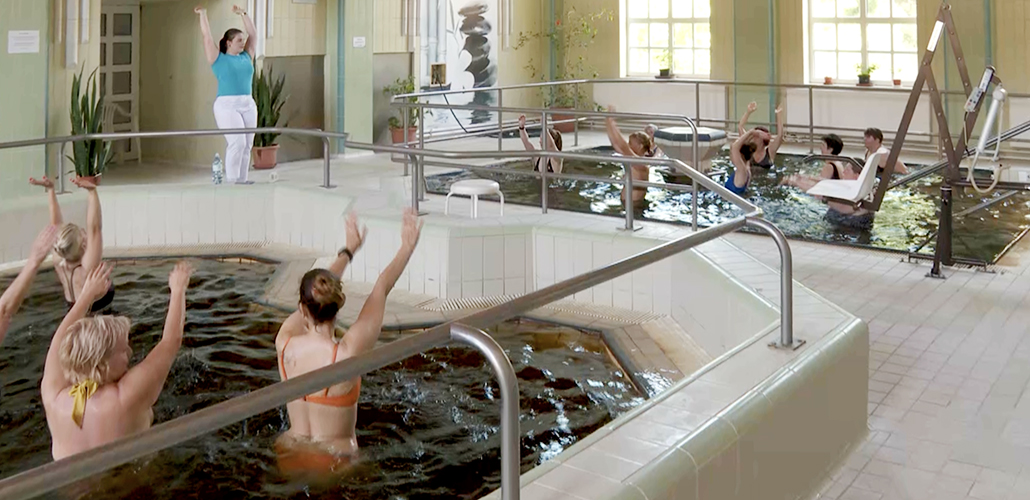
In the water, patients can perform movements that would often be impossible on land – such as walking, running or jumping. At the Gyopáros spa, group physiotherapy takes place in a special therapy pool comprising two adjacent pools. The water temperature is a comfortable 34–35 °C. Various aids such as water noodles, water dumbbells and barbells are available to support the exercises. Duration of the exercises: 25 minutes.
Objectives of water aerobics:
- Maintaining and improving mobility
- Increasing endurance
- Correcting poor posture and improving body posture
- Promoting joint mobility and protecting the joints
- Training of balance and coordination
- Strengthening of body awareness and body perception
- Improvement of movement coordination of arms and legs (synkinesis)
- Support for breathing, particularly exhalation
- Fine motor skills training for hands and fingers
Indications:
- Indications for aqua aerobics: Neurological conditions that impair spatial awareness, balance and coordination; increasing joint mobility following accidents (once wounds have healed!); improving muscle elasticity; strengthening
- Conditions of the musculoskeletal system: Disorders of the bones, joints and muscles, e.g. scoliosis, Scheuermann’s disease, degenerative joint diseases, e.g. osteoarthritis, rheumatological disorders, e.g. rheumatoid arthritis (RA), ankylosing spondylitis (AS), circulatory disorders, varicose veins, metabolic disorders, obesity
Contraindications:
- Heart failure
- Severe cardiac arrhythmias
- Acute joint inflammation
- Infectious skin conditions
- Altered consciousness
- Incontinence
Tangentor
Improve circulation, regain strength
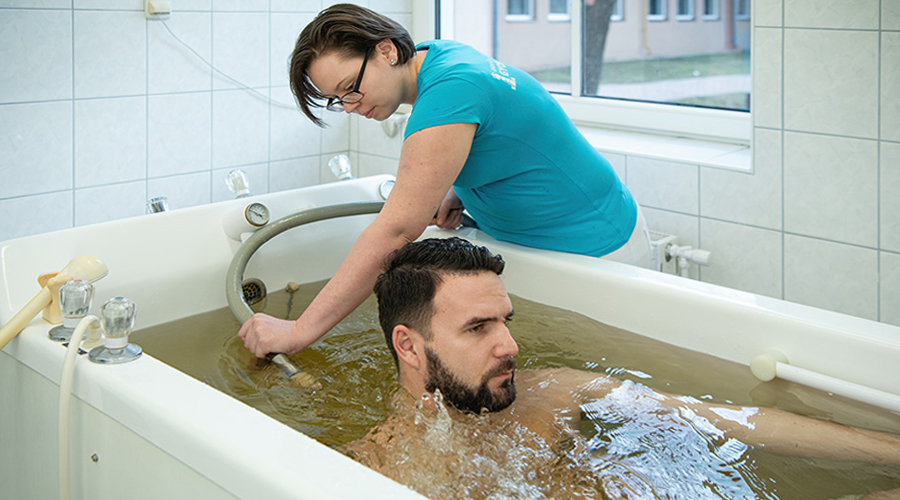
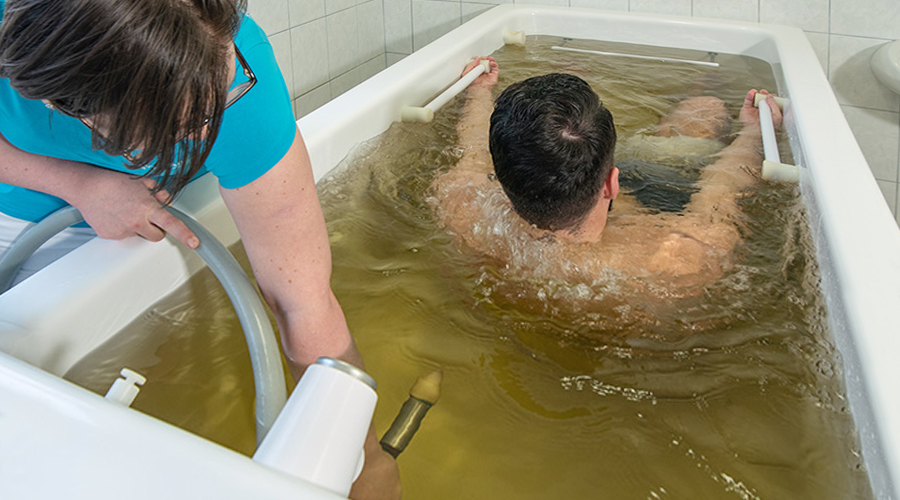
The Tangentor is a medical device used for underwater jet massage (also known as targeted flow massage). Thermal water is drawn from the bath and directed back onto the patient at an adjustable pressure whilst they lie in a tub filled with water at a temperature of approximately 35 °C. The device can theoretically generate a pressure of up to 6 bar; in practice, however, a maximum of 0.7–2.0 bar is used.
Treatment procedure
The therapy begins with a distance of 20–30 cm between the nozzle and the skin. The distance is gradually reduced to around 10 cm to increase the pressure. A perpendicular water jet is usually used. The maximum treatment duration is 20 minutes.
Biological effect
Underwater jet massage promotes local blood circulation and thus boosts metabolism. The mechanical effect influences not only blood circulation but also lymph flow – this helps to relieve lymphatic congestion. Muscle tone is also improved.
Indications
The main areas of application are the soft tissues surrounding affected joints and the musculature along the spine. The therapy is used for:
- Peripheral circulatory and lymphatic disorders
- Post-operative rehabilitation
- Improvement of physical condition
- General physical weakness
Contraindications
In addition to the general contraindications for balneotherapy (e.g. acute inflammation, severe cardiovascular diseases), extensive varicose veins and the risk of thrombosis or embolism must be taken into account.
Medical Therapeutic Massage
A proven therapy for body and mind
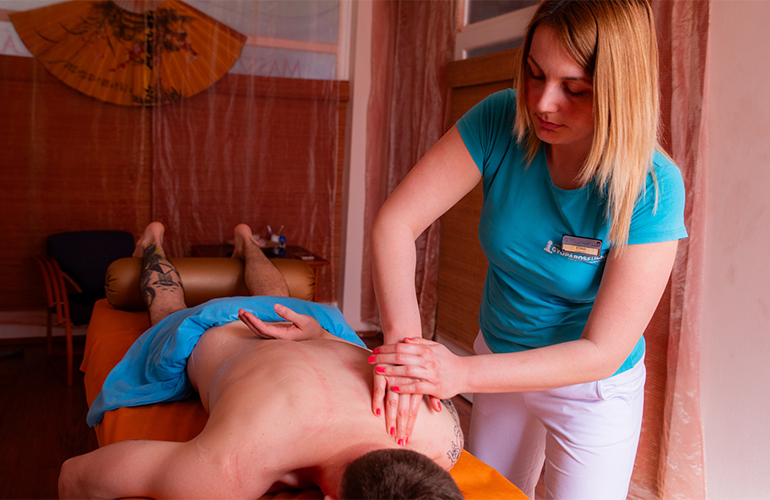
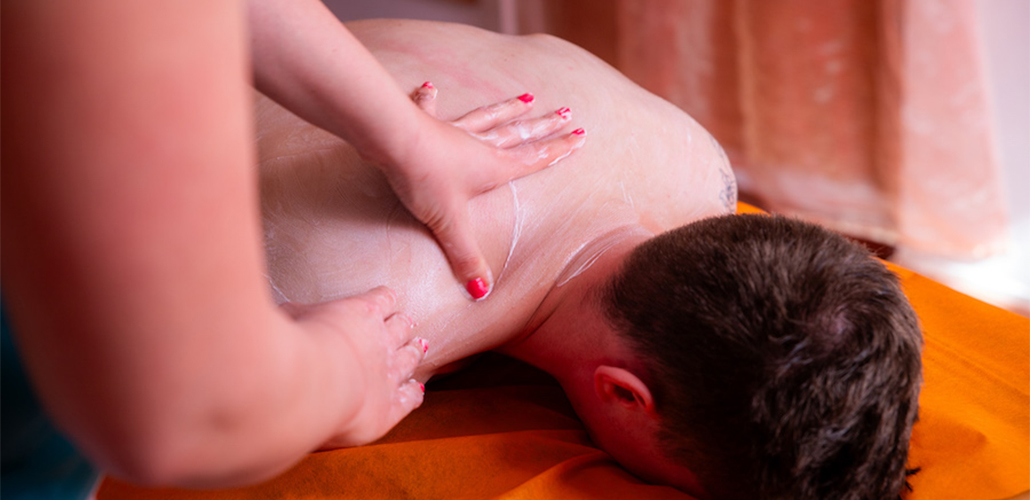
Medical therapeutic massage is one of the oldest and most effective treatment methods – particularly for conditions affecting the musculoskeletal system and for alleviating the effects of a sedentary, stressful or physically demanding lifestyle.
Procedure and effects
At Gyopárosi Gyógyfürdő, experienced therapeutic masseurs carry out the treatment in accordance with a doctor’s prescription. Over the course of 20 minutes, they focus specifically on the affected areas of the body. Special massage techniques are used to relax tense muscles and stimulate blood circulation and metabolism.
Benefits of therapeutic massage:
- Relief from pain and fatigue
- Improved mental well-being and concentration
- Maintenance of skin elasticity and promotion of a youthful appearance
- Ideal complement to detoxification treatments
Carbonated Bath
Revitalising therapy for the heart, circulation and metabolism
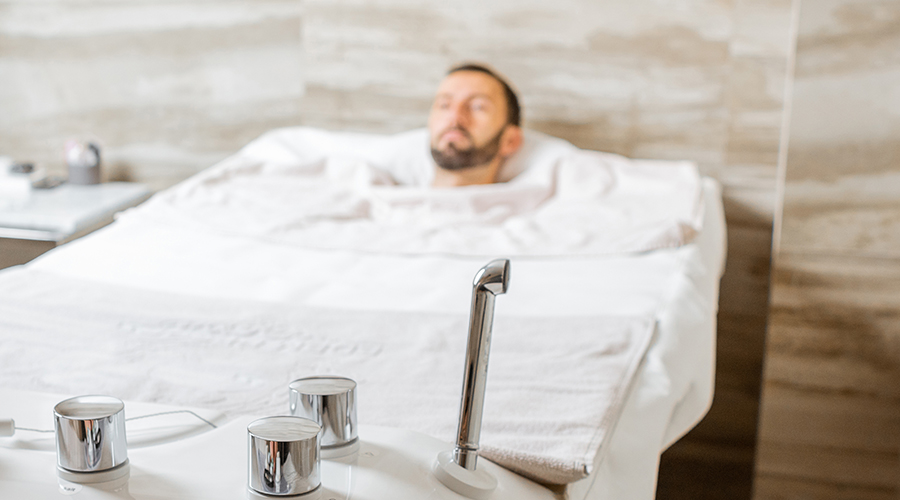
The carbonated bath is a tried-and-tested therapeutic method for treating peripheral circulatory disorders, vascular constriction and mild heart complaints, as well as for rehabilitation following heart attacks. It is also effective for exhaustion, stress-related complaints and diabetes, and helps to prevent osteoporosis.
Treatment procedure
The patient is placed in a half-filled tub containing thermal water at 34–35 °C. Carbonated water (1000 mg CO₂ per litre, 32 °C) is then gradually introduced. To optimise the effect, the tub is covered to ensure that as little carbon dioxide as possible escapes. The treatment lasts 6–8 minutes (maximum 15 minutes).
Mode of action
The carbon dioxide causes the superficial blood vessels to dilate and promotes blood circulation in the skin, subcutaneous connective tissue and muscles. This improves blood distribution and the oxygen supply to the tissue.
Indications:
- Cardiovascular diseases
- Circulatory disorders of the musculoskeletal system
- Prevention of osteoporosis
- Autonomic nervous system disorders and the effects of stress
Weight-bearing bath
Gentle relief for the spine and joints
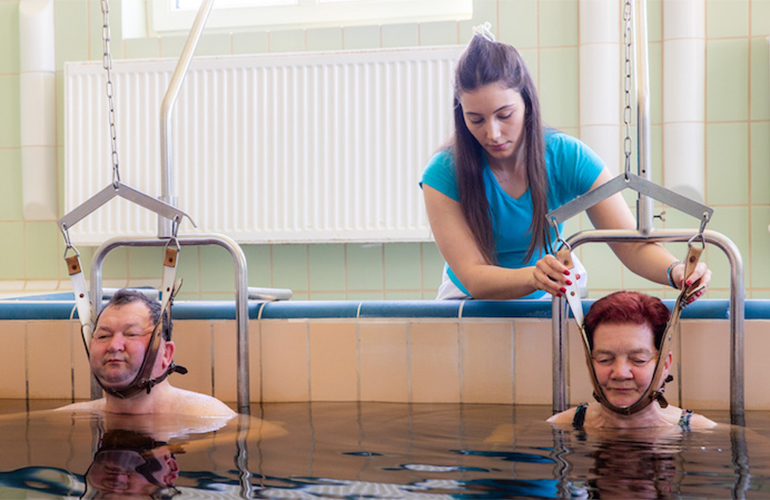
The weight bath is a tried-and-tested Hungarian therapeutic method specifically designed to stretch the spine and perform underwater stretching of the major joints (hips, knees, ankles). The treatment is particularly recommended for complaints affecting the cervical and lumbar spine, as well as for degenerative changes in the joints.
Origin and effects
Developed by the Hungarian rheumatologist Károly Moll, the weight bath utilises the buoyancy of water, targeted traction forces and the healing properties of thermal water. The aim is to relieve pinched nerves, reduce muscle tension along the spine and alleviate restricted movement in the spine, hips and knees.
Treatment procedure at Gyopárosfürdő
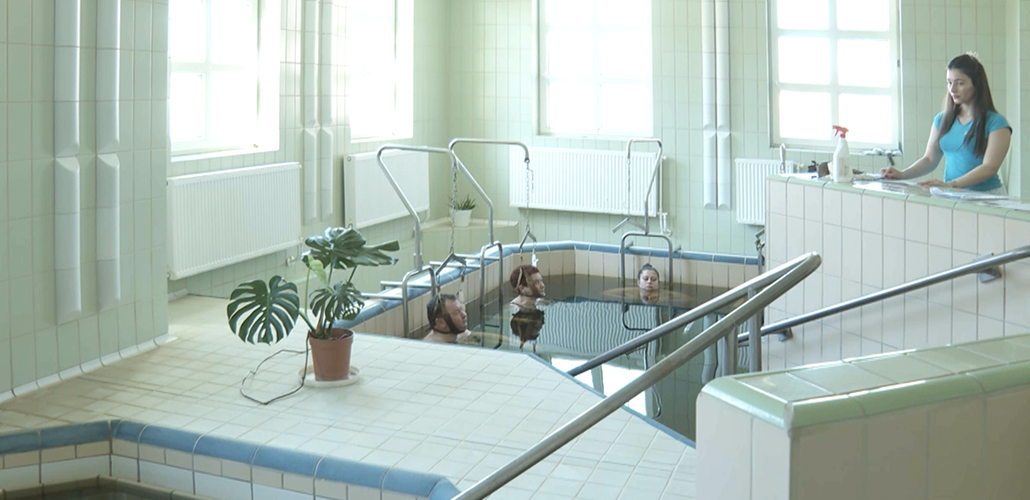
The therapy takes place in a special pool with a 50 cm wide edge trench. The patient is suspended either at a single point (using a sliding hook around the neck) or at two points (using underarm supports). The stretch is gradually intensified using additional weights – starting without weights, then with 1–10% of body weight (as directed by a doctor). The water temperature is a comfortable 34–35 °C, and the treatment lasts 15 minutes.
Indications:
- Degenerative changes in the spine, hips and knees
- Back pain and muscle tension
- Radiating nerve pain (neck, hips)
- Migraine
- Herniated discs
- Muscle shortening in the hips and knees
- Early stages of ankylosing spondylitis (Bechterew’s disease)
- Scheuermann’s disease
Contraindications:
- Spinal instability
- Acute inflammation or disorders of the musculoskeletal system
- Following spinal, hip or knee surgery (individual assessment required)
- Advanced osteoporosis
- Venous insufficiency, leg ulcers
- Advanced arterial narrowing
- Infectious skin conditions
- Pregnancy
- Bleeding or risk of bleeding
- Impaired urinary continence
- Fever, tuberculosis, malignant tumours
- Advanced liver and kidney disease
- Multiple sclerosis, high blood pressure
- Menstruation
- Advanced age (depending on individual condition)
Mud therapy
Natural detoxification and pain relief
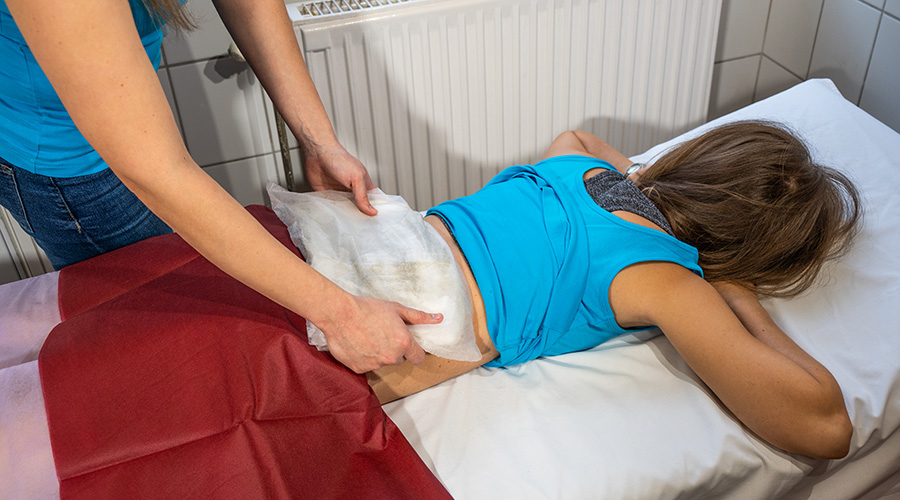
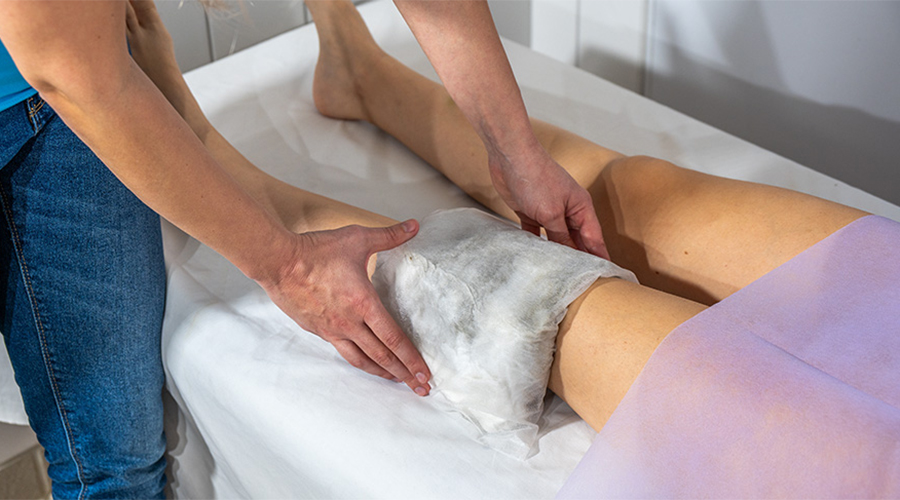
For centuries, therapeutic mud has been used in medicine for its detoxifying and healing properties. Thanks to its unique mineral composition and high heat retention capacity, it stimulates blood circulation, ‘draws’ toxins from the tissues and has a deeply relaxing effect on the muscles. Mud therapy has proven particularly effective for sports injuries, rheumatic conditions, chronic musculoskeletal complaints and gynaecological ailments.
Mode of action
The mud exerts an osmotic effect: it draws excess fluid from the joints, improves the oxygen supply to the tissues and thus alleviates pain. At the same time, the heat has a vasodilatory, metabolism-stimulating and muscle-relaxing effect – a subsequent massage can further enhance the healing effect.
Application at Gyopárosfürdő
High-quality Marosi mud is used here. The treatment is administered as a partial application (e.g. back, knee or hip), as a full-body application would place too great a strain on the cardiovascular system. The mud, heated to 38–42 °C, remains on the skin for around 20 minutes, followed by a rest period.
Indications:
- Chronic joint inflammation
- Follow-up treatment for accident injuries and fractures
Contraindications:
- Fever or acute inflammation
Subcutaneous bleeding, haematomas or open wounds
Thrombosis, risk of thrombosis or thrombophlebitis
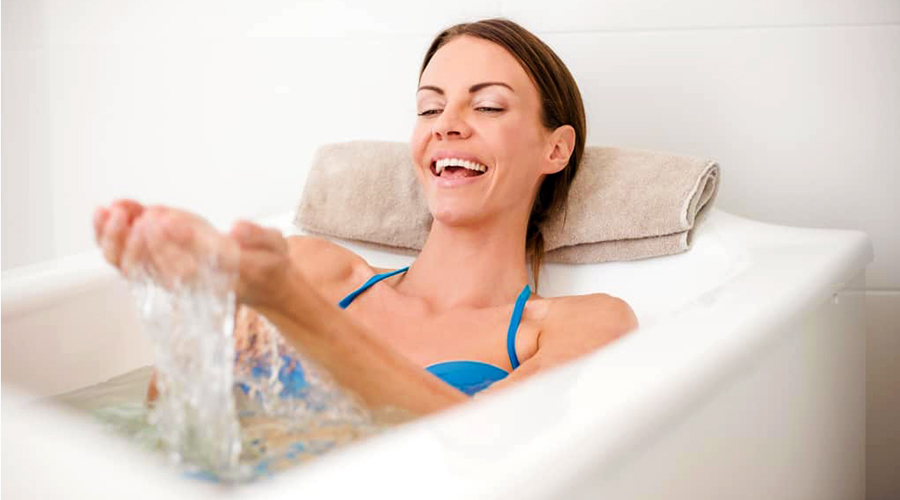
Therapeutic Bath
Relax in privacy
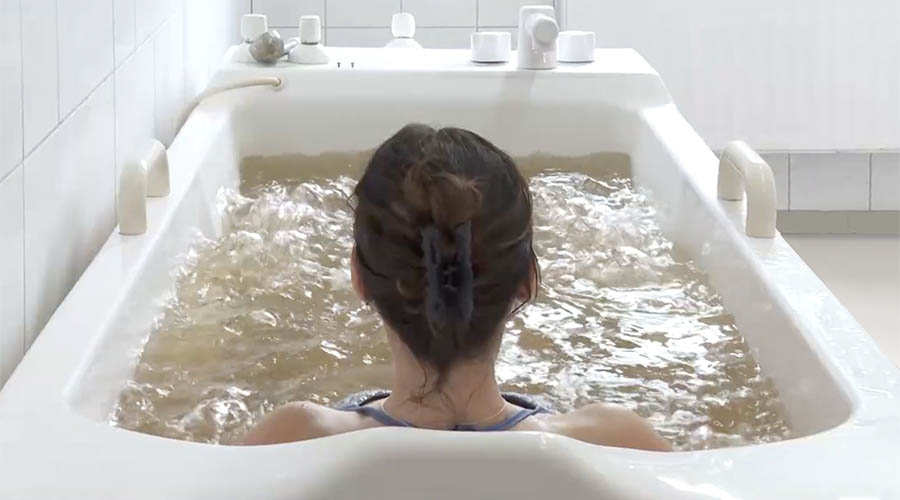
The personalised therapeutic bath offers the same privacy and intimacy as a bath at home. The maximum duration of the session is 40 minutes. With code 02, we offer our guests a treatment recognised by the NEAK (National Health Insurance Fund), which is carried out on the recommendation of a dermatologist. Thanks to the high metacetic acid content of our therapeutic water, the bath at Gyopárosfürdő is ideal for the treatment of psoriasis.
Thermal pool with healing water
For physical activity, mental well-being and renewed energy
By harnessing the relaxing and restorative properties of the healing water, we use the thermal pool to treat musculoskeletal disorders, chronic joint inflammation, reduce nervous exhaustion and alleviate depressive states.
Treatment under code 01 is covered by the NEAK. The course of treatment (comprising 15 sessions) may only be commenced following a prior examination by a specialist. A swimming pool treatment is generally recommended to last between 20 and 40 minutes. A bath treatment lasting more than one hour is not recommended for anyone.
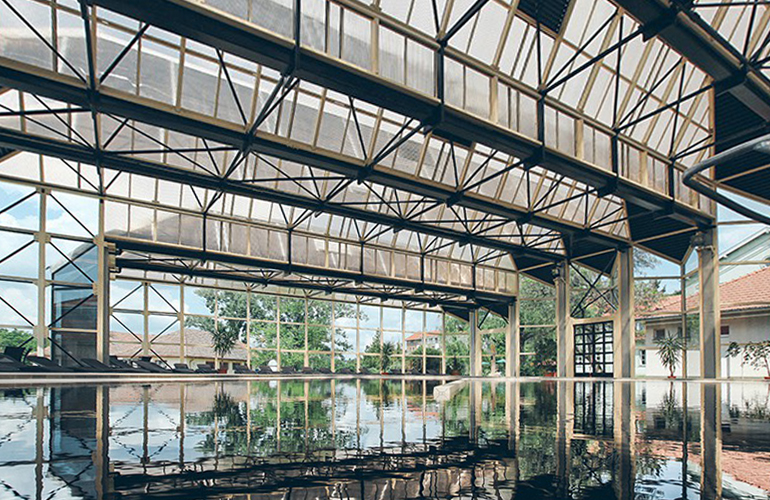
At the Gyopáros Spa, guests currently have access to one therapeutic water pool.
Indications:
- Degenerative diseases of the spine and joints of the extremities
- Psoriasis
- Gynecological inflammations
- Chronic inflammations
- Joint effusions
- Cardiovascular diseases
- Prevention and rehabilitation of musculoskeletal disorders
- Post-operative follow-up treatment
Contraindications:
- Atrial fibrillation
- Severe angiopathy
- Within 3 months of a heart attack
- Heart failure
- High blood pressure with readings above 180/120 mmHg
- Acute stage of musculoskeletal disorders and other conditions
- Advanced arteriosclerosis
- Exacerbation stage of multiple sclerosis
- Incontinence
- Advanced liver and kidney disease
- Progressive muscle weakness
- Fever
- Tuberculosis
- Osteomyelitis
- Infectious disease
- Pregnancy
- Cancer, particularly in the case of sulphur baths
- Mental illness
- Age over 60–70 years, taking biological age into account